Buy Ammo by the Case and Save Big on Bulk Rifle and Pistol Rounds
Running low on ammunition during a long range session or training course is a frustrating interruption. Buying ammo by the case solves this by delivering a large, fixed quantity—typically 500 to 1,000 rounds—in a single sealed package, ensuring you have a consistent supply ready when you need it. This 5.56 Ammo for Sale bulk purchasing format usually lowers the cost per round compared to individual boxes, and it simplifies inventory management since you simply break open one case instead of tracking many small purchases. To use it, you store the sealed case in a cool, dry place and then pull individual boxes from it as needed, keeping your shooting schedule uninterrupted.
Why Buying a Full Case of Cartridges Actually Saves You Money
Buying ammo by the case reduces the per-round cost because manufacturers and retailers price bulk packaging at a lower margin than individual boxes. When you purchase 500 or 1,000 rounds in one sealed case, you eliminate the per-box handling, labeling, and shipping overhead that drives up the price of smaller quantities. This volume discount typically translates to 10–20% savings per cartridge, which becomes significant over months of range time. You also spread a single shipping fee across far more rounds, cutting the cost-per-delivery dramatically. Additionally, a full case protects against price creep; locking in today’s rate for a thousand rounds means you avoid paying more next month for the identical load. While the upfront cash outlay feels heavy, the savings per box compound with every practice session, making the case the most efficient financial unit for regular shooters. Finally, fewer transactions mean less chance of impulse buying at the counter, so your budget stays predictable.

Breaking Down the Per-Round Cost Difference Between Boxes and Full Cases
The real math on ammo by the case starts when you divide the sticker price by the round count. A standard 20-round box of 9mm might run you $13, which is 65 cents per round. A full case of 1,000 rounds often lands around $280, dropping that same round to 28 cents. That’s a savings of 37 cents per trigger pull—which doesn’t sound massive until you realize it’s $370 extra in your pocket per case. Even if a case saves less on premium defensive loads, the per-round difference still adds up fast.
Per-round cost drops dramatically .17 HMR Ammo for Sale with a full case—often 30–50% less than buying individual boxes.
How Shipping Fees and Hazmat Charges Change When You Order Volume
Shipping fees and hazmat charges scale favorably when you buy a full case, because carriers price by weight and hazard class, not by box count. A single 20-pound case triggers the same base hazmat fee as two 10-pound boxes, but you pay that fee **once per shipment** rather than per carton. Since hazmat surcharges often jump at 30-pound thresholds, a full case keeps you under that spike, while multiple small orders each incur separate handling and fuel surcharges. You effectively absorb the fixed logistics costs only once, making per-round cost drop noticeably.
Calculating Your True Savings Based on Caliber and Brand
To calculate your true savings when buying ammo by the case, compare the per-round price of a single box against the per-case cost, then divide by total rounds. For caliber and brand comparisons, factor in that premium brands like Federal or Hornady often yield higher percentage savings on cases than budget lines, where margins are already thin. First, list your exact SKU’s price per 20-round box versus the case price (e.g., 500 rounds). Second, subtract any shipping or hazmat fees from the case total. Finally, divide the difference by the case round count—this reveals your net savings per round. For example, .223 Remington from a mid-tier brand might save $0.08/round, while match-grade 6.5 Creedmoor could save $0.15/round, making true savings disproportionately larger for expensive calibers.
What Calibers and Grain Weights Are Available When You Order in Bulk
When you order ammo by the case, bulk options cover most common calibers, including 9mm, .45 ACP, 5.56 NATO, .223 Remington, .308 Win, 6.5 Creedmoor, .300 Blackout, and 12 gauge. Grain weights are equally flexible: 9mm typically ranges from 115 to 147 grains, 5.56 from 55 to 77 grains, and .308 from 147 to 178 grains, with heavier subsonic loads available for .300 Blackout. Bulk purchasing lets you lock in a single grain weight across an entire case, ensuring consistent ballistics for zeroing or competition. Q: Can you mix grain weights within one case order? A: No—cases are uniform, but you can order separate cases per weight. This standardization is a practical advantage, as your firearm’s point of impact stays predictable, and you avoid the cost and hassle of mixing boxes.
Matching Your Firearm’s Twist Rate to the Right Bullet Weight
When ordering ammo by the case,忽略 twist rate is the critical filter for choosing grain weight, as a 1:7 twist stabilizes heavier 62–77 grain bullets Ammo Cans & Storage for Sale while a 1:12 twist only handles 55 grain or lighter. A case of 55 grain .223 will keyhole out of a 1:7 barrel, wasting your bulk purchase. Conversely, a 1:9 twist may handle up to 69 grain but fails with 77 grain match loads. Always confirm your barrel’s twist before committing to a full case, since the per-round savings vanish if half the box spirals inaccurately. For bulk buying, match the bullet length to the twist rate—not just weight—as longer, heavier projectiles require faster twists for proper stabilization. Twist-rate-to-bullet-weight matching prevents costly misfires and guarantees that your case quantity performs consistently at range. Test a small sample first, then scale up.
Choosing Between Full Metal Jacket, Hollow Point, and Soft Point for Case Quantities
When ordering by the case, your bullet jacket choice hinges on cost-per-round and terminal intent. Full metal jacket (FMJ) is the bulk standard for range practice because it feeds reliably and minimizes barrel fouling, making it the most economical option for high-volume orders. Hollow points (HP) and soft points (SP) cost more per case due to complex manufacturing, but they deliver controlled expansion—critical for defensive or hunting loads. However, a case of soft points may be ideal for lever-action 7.62×39 Ammo for Sale tubular magazines, where pointed FMJ risks chain-fire ignition. Prioritize FMJ for training volume, then reserve smaller case lots of HP or SP for duty or hunting.
- FMJ cases offer the lowest per-round price for high-count orders.
- HP cases are best reserved for self-defense, not range depletion.
- SP cases suit hunting or tubular-magazine firearms where expansion matters.
Common Case Sizes: From 500-Round Packs to 1,000-Round Cans
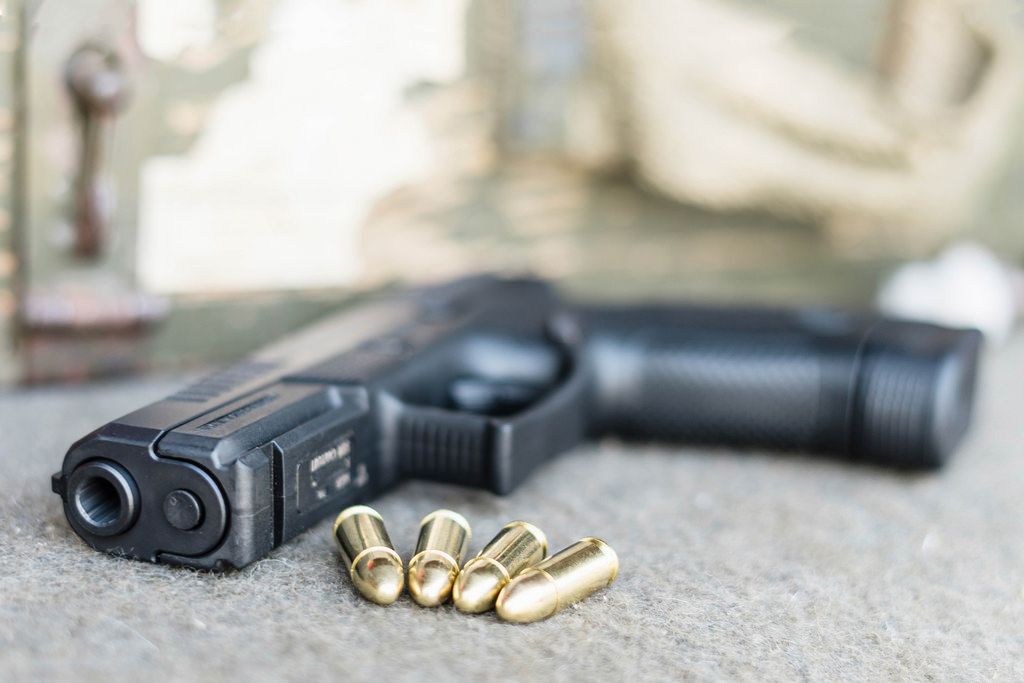
When you buy ammo by the case, you’ll typically see bulk packaging start at **500-round packs**—great for a range day without constant repurchasing—and scale up to hefty 1,000-round cans, often sealed for long-term storage. The 500-round option usually comes in cardboard boxes or loose-packed plastic bags, while 1,000-round cans (commonly for 5.56 or 9mm) offer better per-round savings and moisture resistance. Choose 500 if you want easy handling; go for the can when you’re stocking up. Case sizes directly affect your cost per round and storage footprint, so match them to your shooting pace.
Q: What’s the main trade-off between a 500-round pack and a 1,000-round can?
A: The 500-round pack is lighter and cheaper upfront, but the 1,000-round can gives you lower per-round pricing and better protection against humidity, though it’s heavier to haul around.
How to Store a Full Case of Ammunition Without Damaging It
Store a full case of ammunition in its original factory box, placed inside a sealed plastic tote or ammo can with a desiccant pack to control humidity. Keep the case off concrete floors using a wooden pallet or shelf, as moisture wicks through porous surfaces and corrodes primers over time. Maintain a stable temperature between 55–75°F; avoid attics or garages with wide swings, which cause condensation inside the case. Rotate the case every six months so the bottom layers don’t suffer from prolonged pressure, and never stack more than two cases high to prevent crushing the lower cartridges’ casings. **The single biggest risk is humidity**, so check the desiccant quarterly. 7mm PRC Ammo for Sale Q&A: How often should I open the case to inspect it? Only every six months—frequent opening lets humid air in, so reseal with fresh desiccant after each check.
Ideal Temperature and Humidity Ranges for Long-Term Case Storage
For truly long-term case storage, keep the temperature steady between 55°F and 85°F—avoid big swings that cause condensation inside the box. Humidity is the bigger enemy: aim for 30% to 50% relative humidity. Below 30%, primers can dry out and crack; above 50%, corrosion starts on brass and steel cases. A cheap hygrometer inside your storage area plus desiccant packs in the case handle most climates. Don’t store cases on cold concrete floors—temperature drops there invite moisture. If your garage gets humid in summer, move the case to a climate-controlled closet. Consistency beats extremes every time.
Keep ammo cases at 55–85°F and 30–50% relative humidity, with no rapid fluctuations, to prevent corrosion and primer damage.
Using Desiccant Packs and Ammo Cans to Prevent Corrosion
Sealing a full case of ammo inside a quality ammo can with desiccant packs is your frontline defense against moisture-driven corrosion. Before locking the lid, toss in several reusable silica gel packs—one per fifty rounds is a solid baseline—to absorb trapped humidity. *The key is to pre-dry the packs in a warm oven for an hour, or they’ll simply release stored moisture back onto your primers.* Cans with rubber gaskets create an airtight barrier, but only if the seal is clean and free of debris. Check the desiccant’s color indicator monthly; if it shifts from blue to pink, recharge or replace it immediately. Even a single damp day can start etching case walls, so never skip this step.
Q: How often should I replace desiccant packs inside an ammo can?
A: Replace or recharge them the moment the color indicator changes—typically every 3–6 months depending on local humidity and how often you open the can.
Stacking and Rotating Your Case Supply So Older Rounds Get Used First
When you buy ammo by the case, the boxes stack neatly, but gravity becomes your inventory manager. Place the newest case at the bottom of the pile and the oldest on top, so you naturally grab the rounds that have already been through temperature swings. Rotate your stock every time you break the seal—pull a few boxes from the bottom, shoot them, and drop the fresh case underneath. This creates a constant conveyor belt, preventing the pressure of forgotten primers or corroded brass that comes from sitting untouched for years. Don’t just seal and forget; mark the purchase date on the case with a sharpie, then shift the stack whenever you add new supplies.
Stack newest cases low, shoot the top ones first, and re-stack after every range trip to keep 7.62×51 Ammo for Sale your older rounds cycling into rotation before they degrade.
Best Practices for Working Through a Case at the Range
When you buy ammo by the case, the range becomes a specialty sports & supply marathon, not a sprint. I learned to resist the urge to burn through three hundred rounds in the first twenty minutes—that’s how you build flinch and waste good practice. Instead, I break the case into drill-based increments, loading only five to ten rounds at a time, forcing myself to reset the firearm and reassess after each string. This rhythm lets me track how the lot behaves, noting any consistency in point of impact across different boxes. I keep the empty box tops stacked in my bag to verify I’m rotating stock evenly, preventing heat buildup in one gun and ensuring the same primer feel throughout. The goal is to finish the case with a clear log of what worked, not just an empty brass bucket and a sore shoulder.

Setting Up a Practice Schedule That Matches Your Case Quantity
When you buy ammo by the case, the quantity—often 500 to 1,000 rounds—should directly define your training cadence. Divide the case into weekly allotments based on your range frequency, not your enthusiasm. For a monthly case of 500 rounds, assign 125 rounds per week across two sessions, preserving 10 percent as a reserve for malfunctions or re-shoots. This prevents mid-month depletion and forces deliberate shot economy. Case-quantity pacing also allows you to track round counts against skill goals, like 50 rounds per drill block. Adjust only after you log expenditure, ensuring the schedule remains sustainable without rationing.
- Calculate per-session round limits by dividing the case by your planned range trips.
- Reserve 5–10% of the case for unexpected follow-up drills.
- Reassess allotment monthly, not weekly, to avoid overtraining early.
This approach ties every range outing to a fixed inventory, turning a bulk purchase into a structured progression plan.
Tracking Round Counts and Barrel Heat When Shooting from a Single Case
When drawing from a single case, tracking round counts becomes your primary heat-management tool, as each fired cartridge incrementally raises barrel temperature in a predictable curve. Log the exact number of shots per string, not just total case consumption, because thermal buildup accelerates after roughly 20 consecutive rounds in a typical bolt-action. Use a chronograph or simple tally counter to correlate round count with observed heat mirage, then pause when the barrel exceeds 140°F (touch-test: uncomfortable to hold). This precision prevents accuracy degradation from stringing, while preserving the case’s lot consistency—since you’re not mixing boxes, the variable is purely thermal. Reset your count after each cooldown period, mirroring the case’s lot integrity for repeatable zeroes.
Zeroing Your Optic and Logging Results With One Consistent Lot
Zeroing your optic begins by mounting the scope with a level and consistent torque, then firing a three-shot group from a solid rest at your chosen zero distance using only that same case lot. With one consistent lot, environmental variables and velocity deviations stay controlled, so your point of impact shifts reflect optic adjustment, not ammunition variance. After each group, log the exact click values, group size, and environmental conditions in a notebook alongside the lot number. Track zero repeatability across subsequent trips to confirm the lot’s stability, and record any temperature-induced vertical shift to build a correction chart. This disciplined logging ensures your case-lot-specific zero data transfers reliably to matches or hunting, eliminating guesswork when the same lot is used later.
Buying a Case for the First Time: What to Check Before You Add to Cart
Before you click that cart button on your first case of ammo, stop and check the round count—cases often hold 500 or 1,000 rounds, but some manufacturers pack 250, so know exactly what you’re paying per box. Inspect the primer and sealant on a sample round: if the case has been sitting in a warehouse, moisture can corrode the brass, and a dull, loose primer means you’ll get more failures than range time. Also, verify the lot number matches across all boxes inside the case—mixed lots mean inconsistent velocity and point of impact, which will wreck your zero. For your first case, buy only the same load and grain you already shoot, .17 WSM Ammo for Sale not the cheapest bulk mystery box. **“How do I know if the case’s ammo is fresh?”** Look for a manufacturing date stamped on the case’s outer carton; if it’s older than two years, request a photo of the lot code before you pay. Finally, confirm the case’s dimensions fit your storage—that flat-rate shipping box won’t magically squeeze under your bed if you’re already tight on space.
Verifying Lot Numbers and Manufacturing Dates on Case Packaging
When buying ammo by the case, always check the lot number and manufacturing date printed on the case packaging before you commit. A single lot number ensures every round in that case came from the same production run, which is critical for consistent velocity and point of impact. Manufacturing dates tell you freshness, but more importantly, they allow you to cross-reference any recall notices for that specific batch. Follow this verification sequence:
- Locate the lot number 5.7x28mm Ammo for Sale (usually stamped or ink-printed on the end flap or side panel).
- Find the date code near it—often a Julian date or a month/year format.
- Photograph both, then search the manufacturer’s website for that exact combination.
- Reject the case if the lot number is smudged, missing, or if the date seems older than two years unless it was stored sealed.
A clean, legible lot number and date protect your purchase from hidden variability.
Comparing Case Prices Per Round Across Multiple Retailers
When evaluating case prices per round across multiple retailers, you must calculate the true cost per cartridge, not the bulk total, because shipping and taxes distort the headline number. Start by listing the same exact SKU—brand, grain, and bullet type—on three to five vendor sites, then divide each cart total by the round count. Factor 7.62x54R Ammo for Sale in free-shipping thresholds, as a marginally higher per-round price can beat a cheaper base rate once freight is added. Compare rebate eligibility and tiered discounts, which often apply only to full cases. Use a simple sequence: gather all base prices, add shipping and sales tax, divide by rounds, then rank results. Ignore any listing that omits shipping until checkout, since that hidden cost routinely shifts the ranking by several cents per round.
Confirming Your Firearm’s Recommended Pressure Rating for the Cartridge Lot
Before committing to a full case, confirm your firearm’s recommended pressure rating against the specific cartridge lot’s published data. Each lot can vary in pressure due to powder burn rates and case dimensions, so check the manufacturer’s spec sheet for the lot number printed on the case box. Compare that value with your firearm’s chamber rating—typically stamped on the barrel—ensuring the lot’s average pressure stays below your gun’s maximum allowable limit. If the lot’s pressure is hotter than your firearm’s rating, reject it, as sustained overpressure can damage the action. Match the lot’s peak pressure to your firearm’s certified limit before bulk purchase.
- Locate the lot number on the case’s box or label.
- Look up the lot’s average and maximum pressure from the ammo maker’s online data.
- Verify your firearm’s pressure rating from the barrel stamp or owner’s manual.
- Reject the case if the lot’s maximum exceeds your firearm’s rating by any margin.