Stop Overpaying for Roaming: Switch to eSIM for Travel Now
eSIM for travel is your ticket to instant global connectivity without fumbling with tiny plastic SIM cards. Instead of hunting for a local shop at the airport, you simply scan a QR code from your provider to get a digital plan on your phone. This gives you affordable data and keeps your regular number active for calls and texts. Once set up, you’re online the moment you land, ready to open maps or share your trip with friends.
Why Ditch Plastic SIMs for Global Trips
Landing in a new country, the last thing you want is to hunt for a local SIM kiosk while jet-lagged. Ditching plastic SIMs for eSIMs on global trips means instant connection before you even leave the plane. You avoid juggling tiny cards or risking losing your home number. With an eSIM for travel, activating a local data plan takes a few taps on your phone, not a trip to a shop.
One app, one digital profile, and you seamlessly switch between countries without ever pulling out a SIM tray.
It’s about storing multiple regional plans and swapping them as you cross borders, all while keeping your primary line for calls. No more scratched trays or lost pins—just reliable data from your first coffee abroad to your last sightseeing stop.
Instant connectivity without hunting for local shops
For international travel, instant connectivity without hunting for local shops eliminates a major logistical hurdle. Upon landing, your eSIM activates automatically, providing data the moment you step off the plane. This bypasses the need to locate a kiosk, navigate a foreign SIM card purchase, or wait for manual activation. The process follows a direct sequence:
- Purchase and install the eSIM profile before departure over Wi-Fi.
- Enable the eSIM line in device settings upon arrival.
- Connect to a local network instantly without queuing or exchanging currency for a plastic SIM.
Switching countries without swapping cards
When crossing borders during a trip, Switching countries without swapping cards eliminates the need to fumble with a SIM tray. An active eSIM profile can be automatically deactivated while a new local eSIM for the destination is instantly enabled via a device’s settings menu. This process occurs within seconds, preserving cellular connectivity for maps and messaging without losing the original eSIM’s plan. Users retain access to their primary number through a secondary line if dual SIM is supported, preventing any physical card insertion or removal entirely.
Keeping your primary number active while roaming
When traveling globally, an eSIM lets you keep your primary number active without inserting a foreign SIM. You maintain access to SMS-based two-factor authentication for banking and apps, preventing lockouts. Your home calls still route through, so colleagues or family can reach you on your usual number. Roaming with a dual-active eSIM avoids the hassle of swapping physical cards or forwarding calls. Number continuity protects your connected accounts while you benefit from affordable local data plans.
Keeping your primary number active via eSIM ensures you never miss critical SMS verifications or calls while roaming.
How Digital SIMs Actually Work on the Road
When you land abroad, eSIMs for travel eliminate the need to find a local store. Your phone connects to a local carrier by downloading a digital profile you purchased beforehand. This profile essentially acts as a virtual SIM, securely storing your new roaming number and data plan. On the road, your device automatically scans for partnered networks in that country and authenticates using this stored profile, allowing instant data access without swapping physical cards. You manage everything through a settings menu, enabling the data line while keeping your home number on standby for calls and texts.
One simple scan to activate data abroad
Before you depart, you purchase a local or regional data plan from an eSIM provider. There is no physical card to insert or store to visit. The activation happens through one simple scan to activate data abroad. When you land at your destination and turn on your device, you open your phone’s settings, select the eSIM option, and scan the QR code you received via email. Within seconds, the profile installs and automatically connects to a local network. Your data is live, and you avoid hunting for Wi-Fi or swapping SIMs at the airport.
Dual SIM setup: local data plus your home line
A Dual SIM setup for esim travel lets you keep your home number active while adding a local data plan. Your primary eSIM handles calls and texts from your original line, while the secondary eSIM solely provides high-speed internet in your destination. This prevents roaming fees and allows you to maintain contact via your home number for two-factor authentication or urgent calls. You can switch data priority between SIMs in your settings, ensuring seamless connectivity without swapping physical cards.
- Assign your home eSIM for voice/SMS China eSIM only, and the travel eSIM for all mobile data.
- Keep your home line reachable for verification codes and emergency contacts.
- Toggle data roaming on only the local eSIM to avoid extra charges.
- Manage both lines independently through your phone’s SIM manager menu.
Compatible devices and what to check before you go
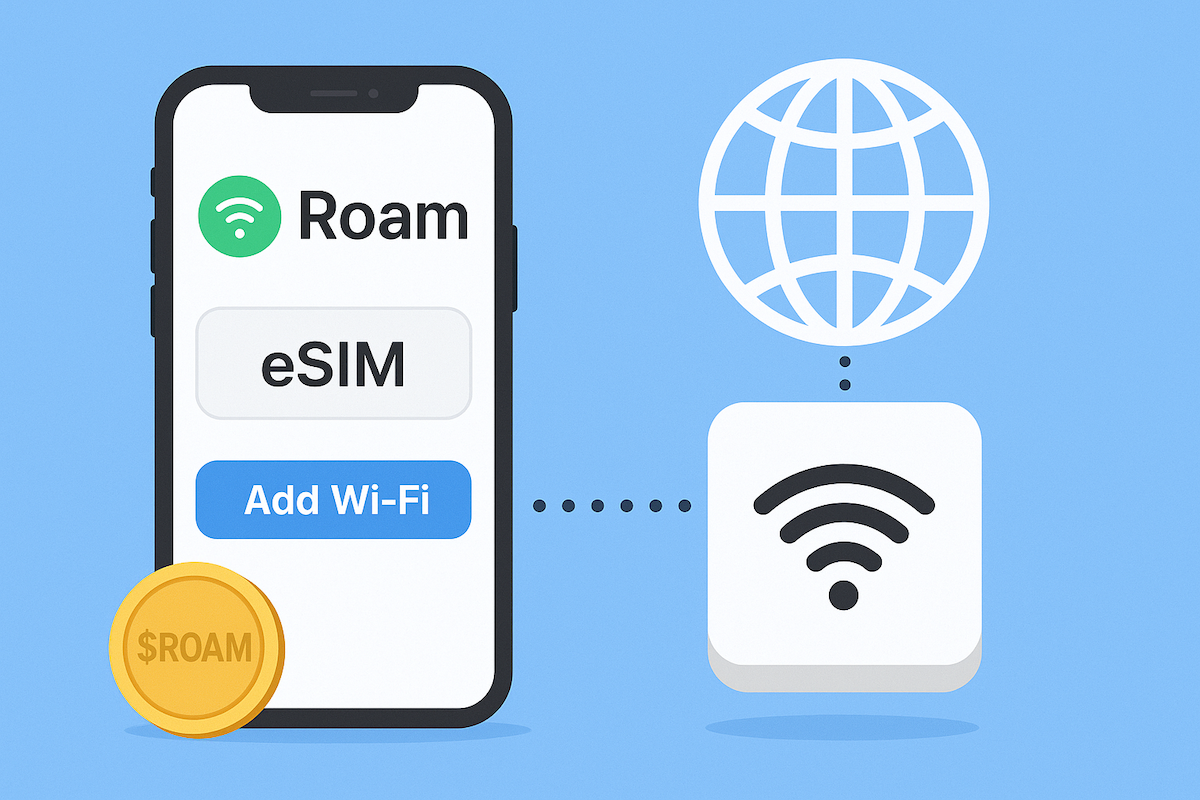
Before you hit the road, first verify your phone supports eSIM—most recent iPhones (XR and later), Google Pixels (3a and later), and Samsung Galaxy S20 or newer are good. Check your carrier’s unlock status; an eSIM won’t activate on a carrier-locked device. Also ensure your phone isn’t still tied to an old eSIM profile from a previous trip, as multiple profiles can conflict. Finally, confirm you have a solid Wi-Fi connection for downloading the new eSIM profile before you leave home.
Q: What’s the quickest way to check if my phone works with eSIM? A: Head to Settings > Cellular (or Mobile Data) and look for “Add eSIM”—if it’s there, you’re good to go.
Best Use Cases for International Travelers

For international travelers, the best use case for an eSIM for travel is instant connectivity the moment you land, skipping the hunt for local SIM cards. It’s perfect for short multi-city trips where you swap plans per country in seconds. Business travelers benefit from keeping their home number active for calls while using a local data eSIM for maps and Uber. Backpackers love it for one-time activation before a trip, avoiding SIM card clutter.
The real game changer is using a regional eSIM for data across several countries, so you never need to find a Wi-Fi password or pay roaming fees.
Finally, it’s ideal for emergency contact—just download a cheap data-only plan to use WhatsApp or iMessage without any physical swap.
Short getaways where physical cards are a hassle
For short getaways spanning a weekend or a few days, the process of sourcing, inserting, and removing a physical SIM card is disproportionally time-consuming. Travelers often waste precious hours at the airport kiosk or hunting down a local shop, only to deal with a tiny card that can be easily lost. An eSIM eliminates this friction entirely, allowing users to activate data within seconds of landing. This efficiency makes eSIM a natural fit for quick trips where every moment counts, turning instant connectivity upon arrival from a luxury into a standard expectation. It removes the anxiety of finding a local provider for a mere 48-hour stay.
Multi-country tours needing seamless transitions
For multi-country tours, the core requirement is seamless international connectivity without manual SIM swaps at each border. A single global eSIM profile activates data automatically upon arrival in each new country, preventing the common gap in service during train or bus crossings. Travelers avoid hunting for local SIMs in unfamiliar terminals, instead maintaining real-time navigation and communication across regions like Western Europe or Southeast Asia. Critical for tight itineraries, this eliminates downtime from reconfiguration, ensuring maps, translation apps, and group chat remain functional the instant the traveler steps off the transport.
Digital nomads juggling work and wanderlust
For digital nomads juggling work and wanderlust, an eSIM eliminates the headache of swapping physical SIMs every time you cross a border, keeping your work tools online instantly. It lets you keep your home number active for client calls while adding a cheap local data plan for Slack and Zoom. To stay productive on the move:
- Buy a global or regional eSIM before departure so you’re connected upon landing.
- Use a dual-SIM setup to keep your work number live on the primary line while secondary data handles navigation and local tasks.
This way you can take that video call from a coworking space in Chiang Mai without scrambling for Wi-Fi passwords.

Comparing Top Service Providers for Overseas Use
The first time I landed in Tokyo with a dead SIM, I swore I’d never repeat that panic. Now, comparing top providers for overseas use means weighing speed against ease. Airalo offers reliable global coverage with a seamless app, but Holafly wins for unlimited data in single-region trips. Yet I’ve learned to check network partners—one provider’s “fast” 4G can throttle in remote areas while another’s stays stable. Choosing the wrong plan often means navigating maps with a loading circle instead of clear directions. For multi-country treks, Nomad eSIM’s flexible top-ups save trouble, while Ubigi excels in Japan. Never assume “global” means equal quality; test customer support response times before buying.
Airalo vs. Holafly: coverage and price differences
When comparing Airalo vs. Holafly for coverage, Airalo offers a wider global reach with local and regional plans useful for multi-country trips, but its data-only packages lack unlimited speed options. Holafly provides unlimited data in over 180 destinations, making it superior for heavy users, though its coverage is more restricted to single countries or specific regions. On price, Airalo’s smaller data bundles cost significantly less for light usage, while Holafly’s unlimited plans are more expensive but eliminate overage fees. For budget travelers needing basic connectivity, Airalo wins; for data-heavy users wanting worry-free speed, Holafly justifies the higher cost.
Airalo offers cheaper, global data-only plans; Holafly provides pricier unlimited data with narrower zone-based coverage.
Ubigi’s regional plans for Asia and Europe
Ubigi’s regional plans offer excellent value for travelers focused on Asia and Europe. In Asia, a single plan covers major destinations like Japan, South Korea, and Thailand, providing high-speed data without needing separate eSIMs per country. For Europe, their regional plan includes 30+ countries, ensuring seamless connectivity from France to Poland. This makes Ubigi’s regional eSIM coverage a practical choice for multi-destination trips across both continents. Below is a quick comparison of these two regional options:
| Region | Coverage Focus | Key Benefit |
|---|---|---|
| Asia | Top destinations (Japan, Korea, Thailand) | Simple one-plan access |
| Europe | 30+ countries | Seamless cross-border travel |
Global eSIMs like iVideo and their data packages
Global eSIMs like iVideo are a solid pick if you want a single data package that works across multiple countries without swapping SIMs. They offer regional plans, like Asia or Europe, with fixed data caps that roll over time, not location. For example, a 10GB plan might cover Japan, South Korea, and Thailand for 30 days. This is perfect for a multi-stop trip where you don’t want to hunt for local SIMs. Regional data packages from iVideo often include high-speed pools, then throttle once you hit the limit—ideal for maps and messaging, less so for streaming.
Q: Can I top up an iVideo eSIM mid-trip if I run out of data? A: Yes, iVideo lets you buy additional data packs directly through their app, which activate instantly without needing a new eSIM.
Steps to Get Connected Before You Leave
Before departing, verify your device’s eSIM compatibility by checking settings or manufacturer specs. Purchase and install your travel eSIM from a provider that offers coverage for your destination. Download the provider’s app and install the plan while you have stable Wi-Fi, ensuring you receive the activation QR code or profile. Test connectivity by toggling cellular data on the eSIM line; do not remove your physical SIM until you confirm the eSIM connects to a network. Finally, preload offline maps and set your messaging apps to use the new eSIM line for a seamless arrival.
Checking device compatibility via settings
Before purchasing an eSIM, verify compatibility by navigating to your device’s settings. On an iPhone, check under Settings > General > About for an “EID” (Embedded Identity Document) number—its presence confirms hardware compatibility. For Android, go to Settings > Connections > SIM Manager to see if an “Add eSIM” or “Mobile plans” option appears. This direct settings check is more reliable than relying on generic device lists, as carrier-specific restrictions can vary. Performing this simple verification ensures your phone can actually connect, avoiding wasted purchases. Checking device compatibility via settings is the definitive first step for successful eSIM activation.
Purchasing and installing a plan from home
Before your trip, purchasing and installing an eSIM plan from home is a seamless process that saves you from hunting for local SIMs at your destination. Simply choose a travel eSIM provider online, select a data package matching your trip length and region, and complete the checkout. Immediately after, you’ll receive a QR code or activation link via email. Open your phone’s settings, scan the QR code or tap the link, and the eSIM profile installs in minutes—often with zero manual configuration. Activate the plan’s start date to sync with your departure.
- Select a plan based on your destination’s coverage and your data needs, not just price.
- Install the profile only when you have strong Wi-Fi at home to avoid delays.
- Label the eSIM clearly in your settings to distinguish it from your primary line.
- Complete installation at least 24 hours before leaving to troubleshoot any issues.
Activating upon arrival without airport kiosks
Activating upon arrival without airport kiosks requires a pre-purchased eSIM and a stable local Wi-Fi connection. Before departure, install the eSIM profile and complete any necessary registration. Upon landing, disable your primary SIM, enable the eSIM line, and connect to airport or hotel Wi-Fi to trigger profile activation. Manual network selection often resolves connection delays. Activating upon arrival without airport kiosks is fully reliable when your device is unlocked and the eSIM is carrier-agnostic.
Q: How do I activate my eSIM if there is no airport Wi-Fi?
A: Use a pre-downloaded offline QR code scanner if required, then manually select a local network; some eSIMs activate automatically upon initial data usage.
Cost-Saving Tricks for Frequent Flyers
Frequent flyers slash costs by ditching physical SIMs and their roaming markups. Instead of buying a new local SIM each trip—and losing time hunting for kiosks—they pre-load one global eSIM that activates on touchdown. The real trick: loading data-only eSIMs while keeping your home line on standby for calls, which saves on international plan fees. Q: How do I avoid overpaying for data across multiple short trips? A: Stack regional eSIMs covering entire continents, like a Europe plan for a month of weekend city breaks, rather than buying separate plans per country. This stretches your budget across five trips instead of one.
Opting for regional bundles over single-country plans
When hopping between countries on a multi-stop trip, snagging regional travel eSIM bundles is a serious money-saver compared to buying a separate single-country plan for each stop. That single-country plan usually covers just one destination, so you’d pay full price again for the next border. A regional bundle, like one covering all of Europe or Southeast Asia, gives you one flat price for data across multiple countries. This way, you avoid the hassle and expense of switching or recharging plans every few days while exploring.
Bottom line: for any trip visiting two or more countries, a regional bundle is cheaper and simpler than stacking separate single-country plans.
Topping up data with pay-as-you-go options
Topping up data with pay-as-you-go options is the ultimate control for frequent flyers, letting you avoid unused data on fixed travel plans. You purchase smaller data bundles on demand, often via an eSIM app, and activate them only when your current allowance runs low. This prevents wasting money on large packages for short layovers or suddenly needing more during an unplanned stopover. Pay-as-you-go eSIM top-ups let you manage costs in real-time, with some providers offering rollover of unused data. Always check if your provider permits on-the-fly refills without changing your primary plan.
- Select a provider with low minimum top-up amounts (e.g., 1 GB) for short trips.
- Save receipts of each top-up to track spending across different countries.
- Use automatic low-balance alerts to add data before depletion during critical navigation.
- Compare per-GB cost of top-ups versus bundled plans for your specific itinerary.
Avoiding hidden fees from third-party resellers
Third-party resellers often obscure the final cost of an eSIM data plan by adding service fees, activation charges, or taxes during checkout. To avoid these, always expand the pricing breakdown before purchase and compare it against the provider’s direct price. Some resellers also apply automatic currency conversion with poor exchange rates, so select billing in the plan’s original currency to sidestep inflated conversion fees. Scrutinize the terms for “free trial” periods that silently convert into subscription auto-renewal fees. A direct carrier purchase or a verified marketplace with upfront pricing eliminates these hidden costs entirely.
Avoid hidden reseller fees by verifying the full checkout price, billing in the plan’s original currency, and rejecting any disguised subscription auto-renewal fees.
Common Pitfalls and How to Sidestep Them
A major pitfall when using an eSIM for travel is assuming it activates instantly upon landing; always install and register the eSIM before your departure while on strong Wi-Fi to avoid a gap in connectivity. Another frequent mistake is ignoring the plan’s data cap or speed throttling after a certain limit, thinking “unlimited” covers heavy streaming or hot-spotting—read the fine print for fair-use clauses. Many travelers also forget to disable their primary home SIM’s data roaming in their phone settings, unknowingly racking up massive charges. Sidestep this by toggling the primary line off entirely for data. Finally, don’t choose the cheapest plan without checking if it supports tethering if you need it; test all features within the first 24 hours to ensure the network aligns with your itinerary.
Network speed drops in rural or remote zones
When you travel to rural or remote zones, eSIM connectivity in low-infrastructure areas can tank as you lose sight of cell towers. Providers often throttle speeds after you burn through a “high-speed” data cap, leaving you stranded on deprioritized networks. To sidestep this, download offline maps and essential files before departing a city. Also, check your eSIM’s partner network—some roam on weaker local carriers.
- Prefetch navigation and translation apps while you have full bars.
- Switch to SMS-only mode for critical texts if video buffering fails.
- Carry a secondary physical SIM from a different provider for redundancy.
Accidental overage charges without proactive limits
The biggest ambush in eSIM travel is burning through data without any speed bumps, leading to unexpected data depletion and costly top-ups. Without proactive limits, streaming a single video or an automatic backup can drain your plan instantly. Sidestep this by activating the eSIM app’s hard cap or low-balance alert before you depart. Some providers force a pause when your limit hits, preventing surprise charges. Always set a manual device data warning to match your plan’s exact amount—this gives you a real-time shield against accidental overage.
Device lock-in: what to do if your phone isn’t supported
Before purchasing an eSIM for travel, first verify your phone’s compatibility by checking the manufacturer’s specifications. If your device is carrier-locked or lacks eSIM hardware, contact your carrier about unlocking policies; most are required to unlock phones upon request. Alternatively, use a physical SIM adapter for a temporary eSIM, or rent a portable hotspot that supports eSIM profiles. Some providers also offer a QR code that can be scanned by a compatible secondary device. Avoid assuming all modern phones work—always confirm eSIM phone compatibility beforehand to prevent service denial upon arrival.
Future Trends in Roaming Without Plastic
Future trends in roaming without plastic mean your eSIM will soon predict your connectivity needs before you land. Imagine your phone automatically switching between local data plans based on real-time signal strength, not just cost. This eliminates the hassle of manual profile swaps. Q: How will eSIMs avoid dead zones in remote travel spots? A: They’ll aggregate multi-network access directly on your device, hopping between regional carriers seamlessly. You’ll also see travel-specific data bundles expire the moment you leave a country, preventing unused charges. Roaming becomes a fully automated, paperless experience where your phone literally shapes its connection around your itinerary, no physical SIM needed.
Carrier-native eSIMs replacing third-party apps
As major carriers integrate carrier-native eSIM profiles directly into device firmware, travelers will bypass third-party app ecosystems entirely. Your phone’s settings menu will display a built-in roaming catalogue, allowing you to purchase and activate a local data plan before departure without installing any external software. This eliminates app-switching for plan management and reduces dependency on third-party customer support for activation issues. The native interface ties billing directly to your existing carrier account, simplifying expense tracking. Activation becomes a single-tap process embedded in system network settings, while third-party apps become redundant intermediaries for provisioning regional data allowances.
| Aspect | Third-Party App | Carrier-Native eSIM |
|---|---|---|
| Installation | Requires app download and registration | None; accessed via device settings |
| Billing | Separate account and payment method | Pulls from existing carrier account |
| Support | Third-party help desk | Direct carrier support through phone menu |
Built-in profiles for major travel corridors
Built-in profiles for major travel corridors now embed pre-configured eSIM data plans directly into a device’s firmware for high-traffic routes, such as the Northeast Corridor in the US or the London-Paris rail link. These automated carrier profiles activate upon crossing a geofenced border, eliminating manual profile downloads. This design prioritizes instant connectivity at transit hubs, automatically switching to local networks as the traveler moves between stations or airports without requiring user intervention.
- Profiles pre-load for specific corridors like the Schengen Area’s high-speed rail network.
- Device eSIM chip stores profiles for up to three major travel corridors simultaneously.
- Auto-switching occurs when the device detects entry into a corridor’s geofenced zone.
Blockchain-based data plans for privacy

Blockchain-based data plans revolutionize eSIM travel by encrypting your usage into immutable, private blocks. You buy anonymous data packages directly from decentralized networks, not carriers, so no central server logs your locations or browsing habits. Each transaction is a smart contract: pay in crypto, instantly activate a secure roaming tunnel that masks your device identity. Your data never touches a telco’s database, preventing surveillance or sale of your travel patterns. This shifts privacy control entirely to you, not a roaming partner—every session remains trustless and untraceable, with zero metadata leakage beyond the blockchain’s encrypted ledger.